
How to Deal With the IRS if You Have Undisclosed Foreign Bank Accounts

The Bank Secrecy Act requires that a Form FinCEN 114, Report of Foreign Bank and Financial Accounts (FBAR), be filed if the aggregate balances of such foreign accounts exceed $10,000 at any time during the year. This form is used as part of the IRS’s enforcement initiative against abusive offshore transactions and attempts by U.S. persons to avoid taxes by hiding money offshore.
The FBAR covers a calendar year and must be filed no later than the deadline (including extension) of your Federal Individual Income Tax Return of the following year and includes any interest a U.S. person has in:
- Offshore bank accounts
- Offshore mutual funds
- Offshore hedge funds
- Offshore variable universal life insurance policies
- Offshore variable annuities a/k/a Swiss Annuities
- Debit card and prepaid credit card offshore accounts
Beware: Timely filing your currently due FBAR does not cure failure to file prior-year FBAR’s!
The penalties for FBAR noncompliance are stiffer than the civil tax penalties ordinarily imposed for delinquent taxes. The penalties for noncompliance which the government may impose include a fine of not more than $500,000 and imprisonment of not more than five years, for failure to file a report, supply information, and for filing a false or fraudulent report.
The Department of Justice started pressuring Swiss Banks including UBS and Credit Suisse to reveal bank account information on their account holders who are U.S. citizens or U.S. residents. Information from the Swiss Banks and other European Banks has now been flowing to IRS and is being used by IRS to uncover taxpayers who have not disclosed foreign income and foreign accounts. The IRS is now aggressively supplementing and corroborating prior leads, as well as developing new leads, involving numerous banks, advisors and promoters from around the world, with a new emphasis in Asia, India, Israel and the Middle East pressuring banks like HSBC and others to reveal U.S. accountholder information. Click here for progress and developments IRS has made in gathering information from foreign banks and foreign governments.
We can assist with IRS tax problems, get you in compliance with your FBAR filing obligations, and minimize the chance of any criminal investigation or imposition of civil penalties.
The IRS has established a Special Unit to disseminate bank information received from foreign banks and compare it to the forms and information reported by U.S. taxpayers on their tax returns. In addition, this Unit is able to review previously filed FBAR’s to determine whether all income was reported on each income tax return. Starting in 2011, taxpayers who have foreign assets will be required to disclose those assets with the filing of their Federal Individual Income Tax Return. This reporting which is made on Form 8938, Statement of Specified Foreign Financial Assets, will serve as an additional tool for this Unit.
Following the mandate of the Foreign Account Tax Compliance Act (FATCA), U.S. tax authorities and foreign governments are on track to conclude dozens of agreements known as Intergovernmental Agreement (IGA) in coming months on the sharing of financial data about citizens. FATCA, made law in 2010 as part of a crackdown on tax dodging by wealthy Americans, requires foreign financial institutions to disclose to the IRS more about Americans’ Offshore accounts. Banks and other institutions are affected by the law, which Treasury is implementing through a series of bilateral lGA’s. Completed pacts are in place with many countries including but not limited to the United Kingdom, Denmark, Ireland, Mexico and Switzerland. FATCA came into full effect on July 1, 2014. If a foreign firm falls to comply with FATCA, it could be frozen out of U.S. capital markets.
In advance of the expected large wave of enforcement to be commenced by IRS, the IRS had established programs for taxpayers to voluntarily come forward and disclose unreported foreign income and foreign accounts.
Options Available For U.S. Taxpayers with Undisclosed Foreign Financial Assets As Modified By The IRS On June 18, 2014
The four options are:
- Voluntary Disclosure Program;
- Streamlined Filing Compliance Procedures;
- Delinquent FBAR submission procedures; and
- Delinquent international information return submission procedures.
- Relief Procedures for Certain Former Citizens (U.S. Expats)
Voluntary Disclosure Program
Since September 28, 2018, the IRS discontinued the Offshore Voluntary Disclosure Program (OVDP); however, on November 20, 2018 the IRS issued guidelines by which taxpayers with undisclosed foreign bank account and unreported foreign income can still come forward with a voluntary disclosure. The voluntary disclosure program is specifically designed for taxpayers with exposure to potential criminal liability and/or substantial civil penalties due to a willful failure to report foreign financial assets or foreign in income.
For all voluntary disclosures received after September 28, 2018, the IRS will apply the civil resolution framework outlined below.
In general, voluntary disclosures will include a six-year disclosure period. The disclosure period will require examinations of the most recent six tax years so taxpayers must submit all required returns and reports for the disclosure period.
The IRS will determine applicable taxes, interest, and penalties under existing law and procedures and assert penalties as follows:
- Except as set forth below, the civil penalty under I.R.C. § 6663 for fraud or the civil penalty under I.R.C. § 6651(f) for the fraudulent failure to file income tax returns will apply to the one tax year with the highest tax liability. For purposes of this memo, both penalties are referred to as the civil fraud penalty and carries a penalty rate of 75% against the amount of increase in tax.
- In limited circumstances, the IRS may apply the civil fraud penalty to more than one year in the six-year scope (up to all six years) based on the facts and circumstances of the case, for example, if there is no agreement as to the tax liability.
- The IRS may apply the civil fraud penalty beyond six years if the taxpayer fails to cooperate and resolve the examination by agreement.
- Willful FBAR penalties will be asserted in accordance with existing IRS penalty guidelines under Internal Revenue Manual Sections 4.26.16 and 4.26.17.
- A taxpayer under this voluntary disclosure program is not precluded from requesting the imposition of accuracy related penalties under I.R.C. § 6662 (which carries a penalty rate of 20%) instead of civil fraud penalties or non-willful FBAR penalties instead of willful penalties (both of which are much higher). Additionally, taxpayers can appeal an agent’s determination to the IRS Office Of Appeals. That being the case, hiring qualified tax counsel experienced in voluntary disclosure early on should increase the chances of securing a lower penalty amount.
Streamlined Filing Compliance Procedures
The streamlined filing compliance procedures are available to taxpayers certifying that their failure to report foreign financial assets and pay all tax due in respect of those assets did not result from willful conduct on their part. The streamlined procedures are designed to provide to taxpayers in such situations (1) a streamlined procedure for filing amended or delinquent returns and (2) terms for resolving their tax and penalty obligations.
Taxpayers will be required to certify that the failure to report all income, pay all tax, and submit all required information returns, including FBARs (FinCEN Form 114, previously Form TD F 90-22.1), was due to non-willful conduct.
If the IRS has initiated a civil examination of a taxpayer’s returns for any taxable year, regardless of whether the examination relates to undisclosed foreign financial assets, the taxpayer will not be eligible to use the streamlined procedures. Similarly, a taxpayer under criminal investigation by IRS Criminal Investigation is also ineligible to use the streamlined procedures.
Taxpayers eligible to use the streamlined procedures who have previously filed delinquent or amended returns in an attempt to address U.S. tax and information reporting obligations with respect to foreign financial assets (so-called “quiet disclosures” made outside of the OVDP or its predecessor programs) may still use the streamlined procedures.
The Streamlined Procedures are classified between U.S. Taxpayers Residing Outside the United States and U.S. Taxpayers Residing in the United States.
U.S. Taxpayers Residing Outside the United States
Requires that taxpayers:
- Meet the applicable non-residency requirement described below (for joint return filers, both spouses must meet the applicable non-residency requirement);
- Certify that the failure to report the income from a foreign financial asset and pay tax as required by U.S. law, and failure to file an FBAR (FinCEN Form 114, previously Form TD F 90-22.1) with respect to a foreign financial account, resulted from non-willful conduct. Non-willful conduct is conduct that is due to negligence, inadvertence, or mistake or conduct that is the result of a good faith misunderstanding of the requirements of the law.
- File 3 years of back tax returns reflecting unreported foreign source income;
- File 6 years of back FBAR’s reporting the foreign financial accounts; and
- Calculate interest each year on unpaid tax.
In return for entering the streamlined offshore voluntary disclosure program, the IRS has agreed:
- Waiver of charges of criminal tax evasion which would have resulted in jail time or a felony on your record; and
- Waiver of other fraud and filing penalties including IRC Sec. 6663 fraud penalties (75% of the unpaid tax) and failure to file a FinCEN 114 (previously Form TD F 90-22.1), Report of Foreign Bank and Financial Accounts Report, (FBAR) (the greater of $100,000 or 50% of the foreign account balance).
- Waiver of the 20% accuracy-related penalty under Code Sec. 6662 or a 25% delinquency penalty under Code Sec. 6651; and
- Waiver of any OVDP penalty.
Non-residency requirement applicable to individuals who are U.S. citizens or lawful permanent residents (i.e., “green card holders”): Individual U.S. citizens or lawful permanent residents, or estates of U.S. citizens or lawful permanent residents, meet the applicable non-residency requirement if, in any one or more of the most recent three years for which the U.S. tax return due date (or properly applied for extended due date) has passed, the individual did not have a U.S. abode and the individual was physically outside the United States for at least 330 full days. Under IRC section 911 and its regulations, which apply for purposes of these procedures, neither temporary presence of the individual in the United States nor maintenance of a dwelling in the United States by an individual necessarily mean that the individual’s abode is in the United States.
Non-residency requirement applicable to individuals who are not U.S. citizens or lawful permanent residents: Individuals who are not U.S. citizens or lawful permanent residents, or estates of individuals who were not U.S. citizens or lawful permanent residents, meet the applicable non-residency requirement if, in any one or more of the last three years for which the U.S. tax return due date (or properly applied for extended due date) has passed, the individual did not meet the substantial presence test of IRC section 7701(b)(3).
U.S. Taxpayers Residing in the United States
Requires that taxpayers:
- Certify that the failure to report the income from a foreign financial asset and pay tax as required by U.S. law, and failure to file an FBAR (FinCEN Form 114, previously Form TD F 90-22.1) with respect to a foreign financial account, resulted from non-willful conduct. Non-willful conduct is conduct that is due to negligence, inadvertence, or mistake or conduct that is the result of a good faith misunderstanding of the requirements of the law.
- File 3 years of back tax returns reflecting unreported foreign source income;
- File 6 years of back FBAR’s reporting the foreign financial accounts;
- Calculate interest each year on unpaid tax; and
- Apply a 5% penalty based upon the highest balance of the account in the past six years.
In return for entering the streamlined offshore voluntary disclosure program, the IRS has agreed:
- Waiver of charges of criminal tax evasion which would have resulted in jail time or a felony on your record; and
- Waiver of other fraud and filing penalties including IRC Sec. 6663 fraud penalties (75% of the unpaid tax) and failure to file a FinCEN Form 114 (previously TD F 90-22.1), Report of Foreign Bank and Financial Accounts Report, (FBAR) (the greater of $100,000 or 50% of the foreign account balance).
- Waiver of the 20% accuracy-related penalty under Code Sec. 6662 or a 25% delinquency penalty under Code Sec. 6651; and
Delinquent FBAR Submission Procedures
Taxpayers who do not need to use either voluntary disclosure or the Streamlined Filing Compliance Procedures to file delinquent or amended tax returns to report and pay additional tax, but who (1) have not filed a required Report of Foreign Bank and Financial Accounts (FBAR) (FinCEN Form 114, previously Form TD F 90-22.1), (2) are not under a civil examination or a criminal investigation by the IRS, and (3) have not already been contacted by the IRS about the delinquent FBARs can file the delinquent FBARs with a statement explaining why the FBARs are filed late. Be aware that the IRS has discretion whether to abate penalties for the failure to file the delinquent FBARs. To qualify for this relief you must have properly reported on your U.S. tax returns, and paid all tax on, the income from the foreign financial accounts reported on the delinquent FBARs and you have not previously been contacted regarding an income tax examination or a request for delinquent returns for the years for which the delinquent FBARs are submitted.
Delinquent International Information Return Submission Procedures
Taxpayers who do not need to use either voluntary disclosure or the Streamlined Filing Compliance Procedures to file delinquent or amended tax returns to report and pay additional tax, but who (1) have not filed one or more required international information returns, (2) have reasonable cause for not timely filing the information returns, (3) are not under a civil examination or a criminal investigation by the IRS, and (4) have not already been contacted by the IRS about the delinquent information returns can file the delinquent information returns with a statement of all facts establishing reasonable cause for the failure to file. As part of the reasonable cause statement, taxpayers must also certify that any entity for which the information returns are being filed was not engaged in tax evasion. If a reasonable cause statement is not attached to each delinquent information return filed, penalties may be assessed in accordance with existing procedures.
Relief Procedures for Certain Former Citizens (U.S. Expats)
The Relief Procedures for Certain Former Citizens introduced by the IRS in September 2019 apply only to individuals who have not filed U.S. tax returns as U.S. citizens or residents, owe a limited amount of back taxes to the United States and have net assets of less than $2 million. Only taxpayers whose past compliance failures were non-willful can take advantage of these new procedures. For those expat-individuals who missed the opportunity to come forward in the IRS’ Offshore Voluntary Disclosure Program (“OVDP”), this is a huge opportunity. Many in this group may have lived outside the United States most of their lives and may have not been aware that they had U.S. tax obligations.
Eligible individuals wishing to use these relief procedures are required to file outstanding U.S. tax returns, including all required schedules and information returns, for the five years preceding and their year of expatriation. Provided that the taxpayer’s tax liability does not exceed a total of $25,000 for the six years in question, the taxpayer is relieved from paying U.S. taxes and they will not be assessed penalties and interest.
These procedures are only available to individuals. Estates, trusts, corporations, partnerships and other entities may not use these procedures.
These procedures may only be used by taxpayers whose failure to file required tax returns (including income tax returns, applicable gift tax returns, information returns (including Form 8938, Statement of Foreign Financial Assets), and Report of Foreign Bank and Financial Accounts (FinCEN Form 114, formerly Form TD F 90-22.1)) and pay taxes and penalties for the years at issue was due to non-willful conduct. Non-willful conduct is conduct that is due to negligence, inadvertence, or mistake or conduct that is the result of a good faith misunderstanding of the requirements of the law.
Other Things To Consider
Recent closure and liquidation of foreign accounts will not remove your exposure for non-disclosure as the IRS will be securing bank information for the last eight years. Additionally, as a result of the account closure and distribution of funds being reported in normal banking channels, this will elevate your chances of being selected for investigation by the IRS. For those taxpayers who have submitted delinquent FBAR’s and amended tax returns without applying for amnesty (referred to as a “quiet disclosure”), the IRS has blocked the processing of these returns and flagged these taxpayers for further investigation. You should also expect that the IRS will use such conduct to show willfulness by the taxpayer to justify the maximum punishment.
Additionally, starting with the 2011 Tax Return Filing Season: U.S. taxpayers who have an interest in foreign assets with an aggregate value exceeding $50,000 must include new Form 8938 (Statement of Specified Foreign Financial Assets) with their Federal income tax return. This reporting will serve as an additional tool for the IRS to determine prior noncompliance of taxpayers who have undisclosed foreign accounts or unreported foreign income. The new Form 8938 filing requirement does not replace or otherwise affect a taxpayer’s obligation to file an FBAR (Report of Foreign Bank and Financial Accounts). Failing to file Form 8938 when required could result in a $10,000 penalty, with an additional penalty up to $50,000 for continued failure to file after IRS notification. A 40% penalty on any understatement of tax attributable to non-disclosed assets can also be imposed.
If the IRS has already selected you for an audit or you are being investigated, these programs are not available to you. To find out how you must now protect yourself, click here.
Click here for FAQ’s on applying for amnesty.
For those taxpayers who have filed for amnesty and are having difficulty with their case or do not have the confidence in their representative to secure the best possible result, we offer a service whereby we would evaluate your case and discuss your options. We have found that the Revenue Agents working these cases have made errors that favor the IRS. Let our experience work for you to avail you of the benefits of this amnesty program with the lowest liability possible. Contact an IRS lawyer today.
Given the wealth of foreign account information released to the IRS and the IRS’ expansion of resources to enforce compliance, this may be the last opportunity for taxpayers to resolve unreported foreign income issues without criminal prosecution. Once the IRS has commenced an investigation, a taxpayer cannot enter into a Voluntary Disclosure Program. We recommend that taxpayers in this situation act immediately and seek assistance from an IRS attorney with expertise in the Voluntary Disclosure Program for undisclosed foreign accounts.
For prompt evaluation of your case, we encourage you to contact us using our toll-free number at 866.494.6829.

 https://www.kahntaxlaw.com/wp-content/uploads/2023/02/What-You-Must-Know-About-IRS-FBAR-Penalty-Negotiations.jpg
600
1500
Tax Attorney
https://www.kahntaxlaw.com/wp-content/uploads/2016/04/Tax-Attorney-Jeffrey-B-Kahn-Tax-IRS-Lawyer-CA-LA-1.jpg
Tax Attorney2023-02-28 20:37:502023-03-01 06:49:55U.S. Supreme Court Provides Relief From FBAR Penalties – What You Must Know About IRS FBAR Penalty Negotiations
https://www.kahntaxlaw.com/wp-content/uploads/2023/02/What-You-Must-Know-About-IRS-FBAR-Penalty-Negotiations.jpg
600
1500
Tax Attorney
https://www.kahntaxlaw.com/wp-content/uploads/2016/04/Tax-Attorney-Jeffrey-B-Kahn-Tax-IRS-Lawyer-CA-LA-1.jpg
Tax Attorney2023-02-28 20:37:502023-03-01 06:49:55U.S. Supreme Court Provides Relief From FBAR Penalties – What You Must Know About IRS FBAR Penalty Negotiations https://www.kahntaxlaw.com/wp-content/uploads/2021/10/pandora-papers-Taxpayers-Allegedly-Involved-In-Hiding-Assets-Offshore.jpg
600
1500
Tax Attorney
https://www.kahntaxlaw.com/wp-content/uploads/2016/04/Tax-Attorney-Jeffrey-B-Kahn-Tax-IRS-Lawyer-CA-LA-1.jpg
Tax Attorney2021-10-04 22:16:172021-11-11 05:24:11Another Leak Of Taxpayers Allegedly Involved In Hiding Assets Offshore – What You Need To Know About The “Pandora Papers”
https://www.kahntaxlaw.com/wp-content/uploads/2021/10/pandora-papers-Taxpayers-Allegedly-Involved-In-Hiding-Assets-Offshore.jpg
600
1500
Tax Attorney
https://www.kahntaxlaw.com/wp-content/uploads/2016/04/Tax-Attorney-Jeffrey-B-Kahn-Tax-IRS-Lawyer-CA-LA-1.jpg
Tax Attorney2021-10-04 22:16:172021-11-11 05:24:11Another Leak Of Taxpayers Allegedly Involved In Hiding Assets Offshore – What You Need To Know About The “Pandora Papers” https://www.kahntaxlaw.com/wp-content/uploads/2020/01/tax-evasion.jpg
500
1500
Tax Attorney
https://www.kahntaxlaw.com/wp-content/uploads/2016/04/Tax-Attorney-Jeffrey-B-Kahn-Tax-IRS-Lawyer-CA-LA-1.jpg
Tax Attorney2020-01-23 21:36:552020-01-27 08:25:02Global Tax Chiefs Meet To Tackle International Tax Evasion
https://www.kahntaxlaw.com/wp-content/uploads/2020/01/tax-evasion.jpg
500
1500
Tax Attorney
https://www.kahntaxlaw.com/wp-content/uploads/2016/04/Tax-Attorney-Jeffrey-B-Kahn-Tax-IRS-Lawyer-CA-LA-1.jpg
Tax Attorney2020-01-23 21:36:552020-01-27 08:25:02Global Tax Chiefs Meet To Tackle International Tax Evasion https://www.kahntaxlaw.com/wp-content/uploads/2019/09/IRS-Announces-Program-For-U.S.-Expats-To-Come-Into-Compliance.jpg
500
1200
Tax Attorney
https://www.kahntaxlaw.com/wp-content/uploads/2016/04/Tax-Attorney-Jeffrey-B-Kahn-Tax-IRS-Lawyer-CA-LA-1.jpg
Tax Attorney2019-09-09 00:46:202019-09-21 17:21:00IRS Announces Program For U.S. Expats To Come Into Compliance With Their U.S. Tax And Filing Obligations
https://www.kahntaxlaw.com/wp-content/uploads/2019/09/IRS-Announces-Program-For-U.S.-Expats-To-Come-Into-Compliance.jpg
500
1200
Tax Attorney
https://www.kahntaxlaw.com/wp-content/uploads/2016/04/Tax-Attorney-Jeffrey-B-Kahn-Tax-IRS-Lawyer-CA-LA-1.jpg
Tax Attorney2019-09-09 00:46:202019-09-21 17:21:00IRS Announces Program For U.S. Expats To Come Into Compliance With Their U.S. Tax And Filing Obligations https://www.kahntaxlaw.com/wp-content/uploads/2019/06/MADE-SOME-MONEY-OVERSEAS-IS-TAXABLE.jpg
500
1100
Tax Attorney
https://www.kahntaxlaw.com/wp-content/uploads/2016/04/Tax-Attorney-Jeffrey-B-Kahn-Tax-IRS-Lawyer-CA-LA-1.jpg
Tax Attorney2019-06-20 07:12:462019-06-20 08:06:19Remainder For U.S. Taxpayers – Income from Abroad is Taxable
https://www.kahntaxlaw.com/wp-content/uploads/2019/06/MADE-SOME-MONEY-OVERSEAS-IS-TAXABLE.jpg
500
1100
Tax Attorney
https://www.kahntaxlaw.com/wp-content/uploads/2016/04/Tax-Attorney-Jeffrey-B-Kahn-Tax-IRS-Lawyer-CA-LA-1.jpg
Tax Attorney2019-06-20 07:12:462019-06-20 08:06:19Remainder For U.S. Taxpayers – Income from Abroad is Taxable https://www.kahntaxlaw.com/wp-content/uploads/2019/04/cannabis-business-tax-return-extention.jpg
450
1000
Tax Attorney
https://www.kahntaxlaw.com/wp-content/uploads/2016/04/Tax-Attorney-Jeffrey-B-Kahn-Tax-IRS-Lawyer-CA-LA-1.jpg
Tax Attorney2019-04-08 06:04:382019-04-08 06:06:31Why Taxpayers Involved In Offshore Accounts, Crypto-Currency Or Cannabis Should Be Filing An Extension For Their 2018 Income Tax Returns.
https://www.kahntaxlaw.com/wp-content/uploads/2019/04/cannabis-business-tax-return-extention.jpg
450
1000
Tax Attorney
https://www.kahntaxlaw.com/wp-content/uploads/2016/04/Tax-Attorney-Jeffrey-B-Kahn-Tax-IRS-Lawyer-CA-LA-1.jpg
Tax Attorney2019-04-08 06:04:382019-04-08 06:06:31Why Taxpayers Involved In Offshore Accounts, Crypto-Currency Or Cannabis Should Be Filing An Extension For Their 2018 Income Tax Returns. https://www.kahntaxlaw.com/wp-content/uploads/2018/12/IRS-Undisclosed-Foreign-Bank-Accounts-OVDP.jpg
450
1000
Tax Attorney
https://www.kahntaxlaw.com/wp-content/uploads/2016/04/Tax-Attorney-Jeffrey-B-Kahn-Tax-IRS-Lawyer-CA-LA-1.jpg
Tax Attorney2018-12-02 21:35:472018-12-03 05:54:43IRS Announces New Procedure For Taxpayers With Undisclosed Foreign Bank Accounts To Enter Into Voluntary Disclosure
https://www.kahntaxlaw.com/wp-content/uploads/2018/12/IRS-Undisclosed-Foreign-Bank-Accounts-OVDP.jpg
450
1000
Tax Attorney
https://www.kahntaxlaw.com/wp-content/uploads/2016/04/Tax-Attorney-Jeffrey-B-Kahn-Tax-IRS-Lawyer-CA-LA-1.jpg
Tax Attorney2018-12-02 21:35:472018-12-03 05:54:43IRS Announces New Procedure For Taxpayers With Undisclosed Foreign Bank Accounts To Enter Into Voluntary Disclosure https://www.kahntaxlaw.com/wp-content/uploads/2018/03/tropical-e833b40e2c_1920.jpg
1095
1920
Tax Attorney
https://www.kahntaxlaw.com/wp-content/uploads/2016/04/Tax-Attorney-Jeffrey-B-Kahn-Tax-IRS-Lawyer-CA-LA-1.jpg
Tax Attorney2018-10-10 23:51:182018-10-11 10:04:32Swiss Banks’ Global Data Exchange Sunsets The Era Of Bank Secrecy
https://www.kahntaxlaw.com/wp-content/uploads/2018/03/tropical-e833b40e2c_1920.jpg
1095
1920
Tax Attorney
https://www.kahntaxlaw.com/wp-content/uploads/2016/04/Tax-Attorney-Jeffrey-B-Kahn-Tax-IRS-Lawyer-CA-LA-1.jpg
Tax Attorney2018-10-10 23:51:182018-10-11 10:04:32Swiss Banks’ Global Data Exchange Sunsets The Era Of Bank Secrecy https://www.kahntaxlaw.com/wp-content/uploads/2018/03/OVDP-DOOR.jpg
563
1000
Tax Attorney
https://www.kahntaxlaw.com/wp-content/uploads/2016/04/Tax-Attorney-Jeffrey-B-Kahn-Tax-IRS-Lawyer-CA-LA-1.jpg
Tax Attorney2018-09-04 22:41:152018-09-05 09:21:03OVDP Ending September 28, 2018
https://www.kahntaxlaw.com/wp-content/uploads/2018/03/OVDP-DOOR.jpg
563
1000
Tax Attorney
https://www.kahntaxlaw.com/wp-content/uploads/2016/04/Tax-Attorney-Jeffrey-B-Kahn-Tax-IRS-Lawyer-CA-LA-1.jpg
Tax Attorney2018-09-04 22:41:152018-09-05 09:21:03OVDP Ending September 28, 2018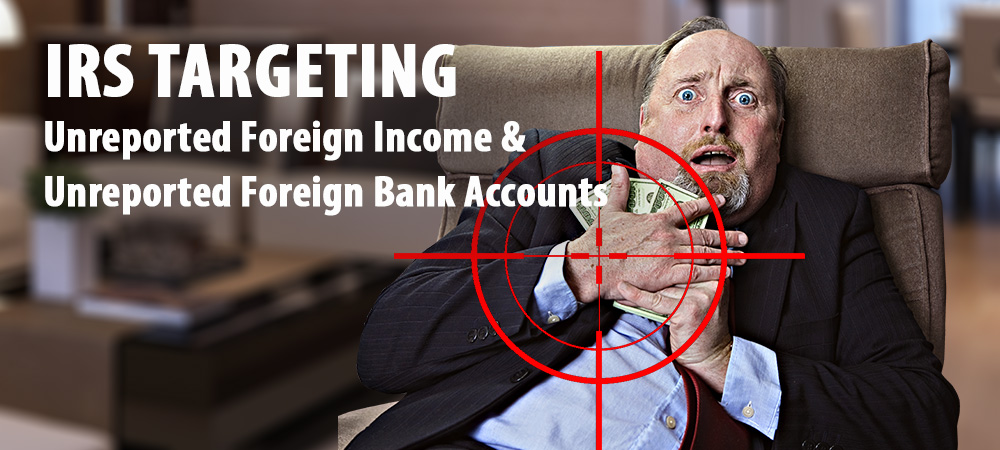 https://www.kahntaxlaw.com/wp-content/uploads/2018/07/IRS-targeting-unreported-foreign-income-bank-accounts.jpg
450
1000
Tax Attorney
https://www.kahntaxlaw.com/wp-content/uploads/2016/04/Tax-Attorney-Jeffrey-B-Kahn-Tax-IRS-Lawyer-CA-LA-1.jpg
Tax Attorney2018-07-18 09:35:412018-07-18 11:04:25IRS Targeting Taxpayers With Unreported Foreign Income And Undisclosed Foreign Bank Accounts
https://www.kahntaxlaw.com/wp-content/uploads/2018/07/IRS-targeting-unreported-foreign-income-bank-accounts.jpg
450
1000
Tax Attorney
https://www.kahntaxlaw.com/wp-content/uploads/2016/04/Tax-Attorney-Jeffrey-B-Kahn-Tax-IRS-Lawyer-CA-LA-1.jpg
Tax Attorney2018-07-18 09:35:412018-07-18 11:04:25IRS Targeting Taxpayers With Unreported Foreign Income And Undisclosed Foreign Bank Accounts https://www.kahntaxlaw.com/wp-content/uploads/2016/05/panama-papers-FBAR.jpg
500
1000
Tax Attorney
https://www.kahntaxlaw.com/wp-content/uploads/2016/04/Tax-Attorney-Jeffrey-B-Kahn-Tax-IRS-Lawyer-CA-LA-1.jpg
Tax Attorney2018-03-13 22:36:512018-03-14 08:15:03The Door Is Closing – IRS To End Offshore Voluntary Disclosure Program.
https://www.kahntaxlaw.com/wp-content/uploads/2016/05/panama-papers-FBAR.jpg
500
1000
Tax Attorney
https://www.kahntaxlaw.com/wp-content/uploads/2016/04/Tax-Attorney-Jeffrey-B-Kahn-Tax-IRS-Lawyer-CA-LA-1.jpg
Tax Attorney2018-03-13 22:36:512018-03-14 08:15:03The Door Is Closing – IRS To End Offshore Voluntary Disclosure Program. https://www.kahntaxlaw.com/wp-content/uploads/2016/04/panama-papers-offshore-banking.jpg
317
554
Tax Attorney
https://www.kahntaxlaw.com/wp-content/uploads/2016/04/Tax-Attorney-Jeffrey-B-Kahn-Tax-IRS-Lawyer-CA-LA-1.jpg
Tax Attorney2018-01-16 11:31:532018-01-16 12:03:51The Calm After The Storm – What’s New With OVDP?
https://www.kahntaxlaw.com/wp-content/uploads/2016/04/panama-papers-offshore-banking.jpg
317
554
Tax Attorney
https://www.kahntaxlaw.com/wp-content/uploads/2016/04/Tax-Attorney-Jeffrey-B-Kahn-Tax-IRS-Lawyer-CA-LA-1.jpg
Tax Attorney2018-01-16 11:31:532018-01-16 12:03:51The Calm After The Storm – What’s New With OVDP? Follow
 Follow